Late-Onset Cerebellar Ataxia:
Reduce the Culture of
Victim Blaming

As part of the Ataxia Aware project we are sharing personal accounts of those suffering with Ataxia or other rare conditions. We want to provide a safe space for people to talk about their experience with disability, whether themselves or someone close to them.

What should we know about you, Louise?

I’ve got a cognitive impairment, which means editing my thoughts and words during conversation can be difficult. I end up in endless tangents and struggle with bringing out what is actually needed in conversations. I’m known as Mrs ‘No Full Stops Given’! My short-term memory is impacted too; I won’t know if 10 minutes or an hour has gone by.

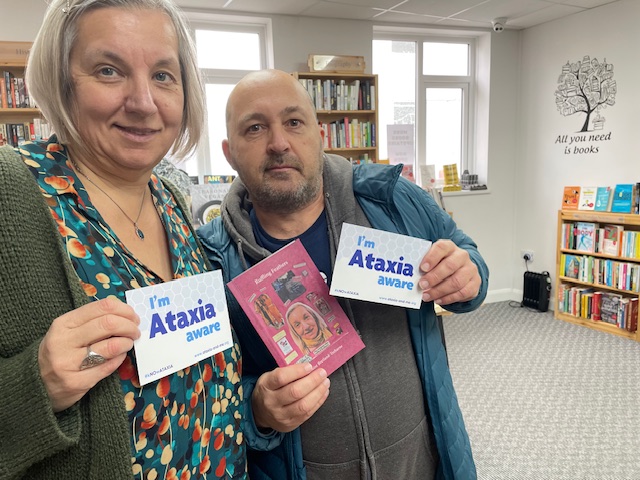
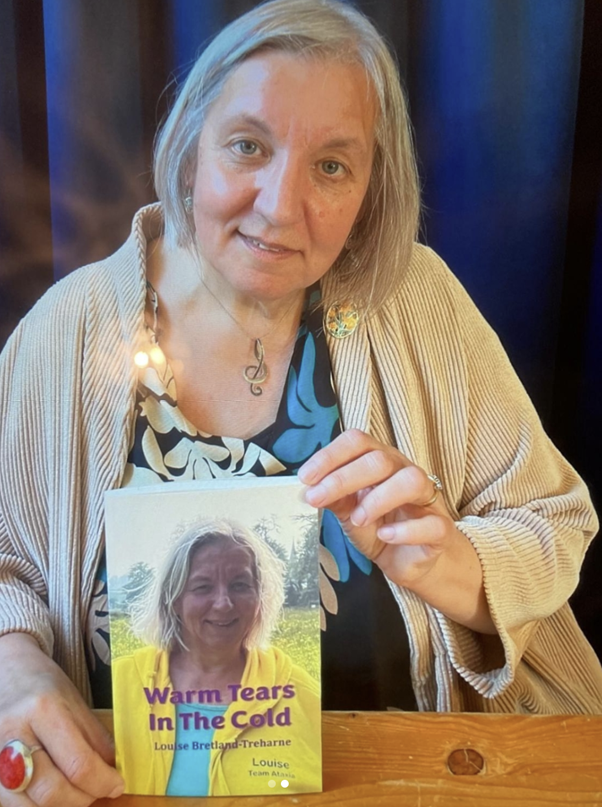
I was writing my memoir, ‘Warm Tears in the Cold’, covering my long journey to being diagnosed with Ataxia. However, due to my cognitive impairment, I had to adapt and write poetry instead, as this was more manageable for me. I have now written a poetry book called ‘Ruffling Feathers’.

What was life like for you before you got Ataxia?

I trained as a neurology nurse in Wimbledon, and I absolutely loved it- it was physically demanding, you needed to think ahead clinically, and science changed, which we had to keep up with. 

In 1990, I was thriving in my job but had to come home to take care of my parents. I still wanted to focus on my career, but there weren’t any neurology jobs locally, so I went into psychiatric nursing.

What was your journey to getting diagnosed with Ataxia?

I ended up having a breakdown and got trapped in the psychiatric system for 21 years. In 2013, I was experiencing Ataxia symptoms (not yet known), and my consultant advised me to come off the psychiatric drugs I was on, as they believed they could be a side effect of the drugs.  

What was most strange to me was when I came off the psychiatric drugs, all my psychiatric features began to subside. This was odd as I had a history of serious mental illness and felt totally crazy on these drugs for 21 years, but the longer off them, the better I got mentally.

I was then later diagnosed with Late-Onset Cerebellar Ataxia. I am now a patient in the Ataxia Clinic in London, and they have told me that the psychiatric drugs I was on could have masked the involuntary neurological movements. Some of these same drugs I was on are also used for neurological conditions.

I’m not bitter that I was trapped in the system for 21 years- I’ve already lost 21 years. Now I can fight for better mind care, more awareness on Ataxia or brain conditions and the human loss of grief.

How has Ataxia impacted you?

Ataxia is like a ticking time bomb; it is unpredictable, full of unknowns. Some of the changes are quite subtle; we might not even recognise them ourselves.

Ataxia is hard work. And when I am struggling, often people don’t recognise how much I’m struggling. They don’t see that when I go home, I’m experiencing vertigo, being sick, completely losing my balance or my tangents in conversation are just unworkable. Navigating noise, new spaces is exhausting, it’s hard to take in information when people are talking.

I can’t drive or use public transport on my own anymore.

I am resilient, and I want to live, but sometimes I do think, why would I, because it’s so difficult.

How has your home life been affected?

Patients never come alone; we have families, and it’s a lot to go through. It has had a big impact on my husband.

My husband moved out of the home a year ago, and we are in the process of looking at divorce. Not because we don’t love each other, but the impact of the psychiatric and Ataxia journey has taken its toll.

There was a carers support group, but there wasn’t enough support given to him; he wasn’t heard.

Twice he has had to do the Heimlich manoeuvre because of my choking. He was fearful that he would come home and find me dead. We are both burnt out. Ataxia can take over your life, and it’s so hard to get anywhere with medical professionals.

What has been your experience of navigating the doctors?

To even see a doctor is so difficult, and then having to advocate for yourself when you’re already vulnerable.  

If you have cognitive or balance issues, you are given antidepressants or anti-anxiety drugs. Research is coming out now from Johns Hopkins University, where they are recognising more cognitive issues for Ataxia patients than was previously believed. But this can easily be perceived as anxiety or depression.

People often accuse me of getting anxious because of the involuntary movements- I am not anxious.

What are the challenges you've had with the doctors?

Patients are often told different things by different doctors. Sometimes, different doctors can tell you information that is out of date or wrong. It feels like you’re going crazy by the time you find a neurologist. I had to fight to be seen by a neuropsychologist.

Often, GPs won’t know the same language that neurological doctors know and the patients get lost in this. Being gaslighted or dismissed is horrible ‘Are you sure you’ve got Ataxia?’

Reducing the culture of victim blaming is important for you. What do you want to see for the future?

My concern for Ataxia patients is how long it takes to be diagnosed.

How long does it take to be believed?

How ill do patients have to get to be believed?

Asking questions is so important. Are people aware of neuropsychology? When patients are asking for psychiatric intervention, are they aware of the care that is involved? Do they really need more labels, more drugs?

More neuropsychologists are needed.

I want to know if my Ataxia is organic (medical), psychiatric or psychological? Because for my Ataxia there is no genetic cause found.  

Tell us about the impact you’ve made on the Ataxia community:

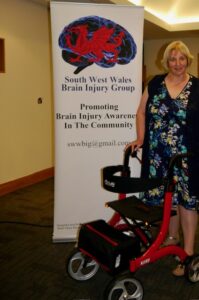
In 2017, I gave a survivor story at the South West Wales Brain Injury Conference. Later that year, I told my story at another conference in Cardiff.

I was able to personally share one of my poems from ‘Ruffling Feathers’ with one of the neuropsychologists there. This poem detailed an experience I’d had in A&E. I know this was shared in the neurology medical community about how psychiatric labels can affect inequality in care.

How much has writing been an outlet for you?

I’m always processing by writing; it’s essential for me.

I did a lot of therapeutic writing when I was a hospice day patient, which was rehabilitation because of my cognitive changes. I’ve always written and told stories, but poetry was new.

I think the arts are becoming more open, and people are talking about their diseases, conditions and traumas, and within this, I’m exploring different niches of what I share where. I’m getting more selective about how I use my voice. I find the first line matters, as some people otherwise think ‘oh no, not another disability story’, it’s important to engage the audience and be creative.

What’s your message for someone who has Ataxia?

It’s really important to find someone who has some experience of living with Ataxia, as well as having experience in the journey to getting the diagnosis.

For me, I have Alan (the founder of Ataxia & Me). I’m able to share what I’ve been told by my neurologist or GP, and we can share our thoughts on this. Having someone you trust who is there continually is so important for support.

There is so much for us to learn together.

Interview by: Aneurin Read

Edited by: Meg Elmer

We would like to thank Louise for sharing her inspirational story with us. If you would also like to get involved and share your experience with Ataxia or another rare condition, please get in contact with us through our social media channels or our email. 

Scroll to top